

05 Oct Injury Claim Lawyer for a Disputed Insurance Claim
When an insurance company disputes an injury claim, the lawyer is generally a personal injury attorney who handles the specific type of accident involved and has experience challenging insurance companies when liability, medical causation, or damages are contested.
That distinction matters. A straightforward claim and a disputed claim can require very different levels of legal work.
Once an insurer argues that you caused the accident, your injuries came from something else, your treatment was unnecessary, or your losses are worth less than you claim, the case becomes an evidence problem as much as a negotiation problem.
You want an injury claim lawyer who knows how to build that evidence, deal directly with the insurer, and prepare the case for litigation if negotiations fail.
Key Takeaways
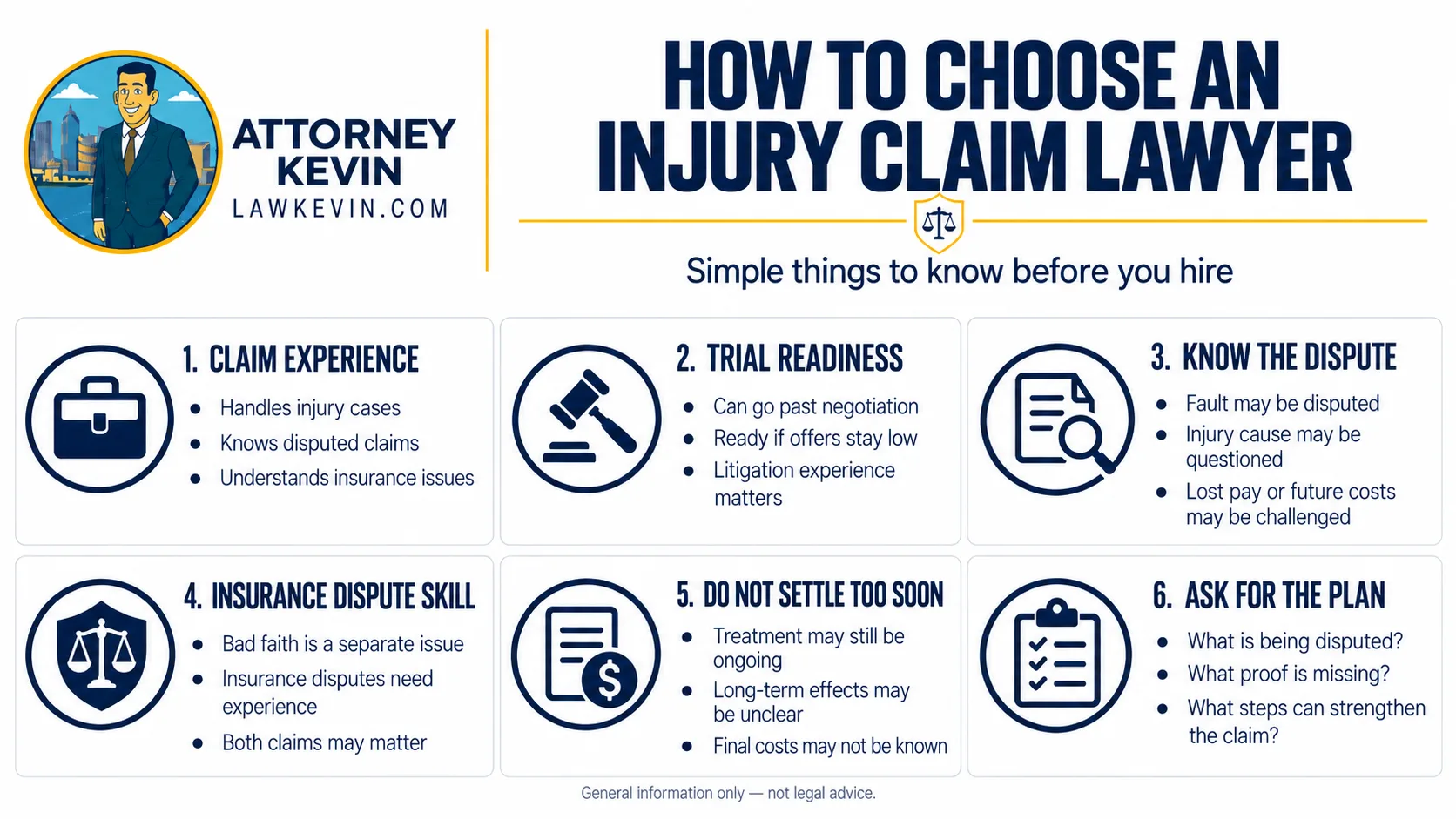
- A disputed injury claim usually calls for a personal injury lawyer experienced with both the underlying accident and contested insurance claims.
- Trial readiness matters because the attorney may need to move beyond negotiations when an insurer refuses to make a reasonable offer.
- The reason for the dispute matters: fault, medical causation, treatment, pre-existing conditions, lost income, and future damages require different evidence.
- Insurance bad faith and the underlying personal injury claim are related but legally distinct issues in many situations, so experience with insurance disputes can be important.
- Be cautious about accepting a settlement while medical treatment is still ongoing because the long-term effect of the injury may not yet be clear.
- The right lawyer should explain what is being disputed, what evidence is missing, and what steps can strengthen the claim.
Get a Free Consultation
Call us at (813) 598-4868
What Type of Lawyer Handles a Disputed Injury Insurance Claim?
A personal injury attorney is generally the right type of lawyer when an insurance company disputes compensation for bodily injuries caused by another person or business.
Personal injury law covers claims arising from incidents such as vehicle crashes, falls, defective products, and other situations in which negligence causes injury. Different claim types can involve different liability standards and evidence, which is why the attorney’s specific experience matters.
For example, a lawyer who primarily handles car accident claims may be a stronger fit for a disputed auto injury case than an attorney whose practice focuses on an unrelated area of law.
The competitor material supplied for this article similarly identifies motor vehicle accidents, premises liability, medical malpractice, product liability, and other injuries as distinct categories of personal injury cases rather than treating every injury claim the same way.
But once an insurance company formally challenges the claim, we would look beyond the lawyer’s practice-area label.
The more useful question becomes:
Does this attorney know how to prove the exact issue the insurance company is disputing?
Why a Disputed Insurance Claim Requires More Than Basic Negotiation
Insurance disputes can develop for several reasons.
The insurer may accept that an accident occurred but disagree about who caused it. It might accept liability but argue that some of your treatment was unrelated to the accident. It may agree that you were injured but dispute how seriously the injury affects your work or daily life.
Those are very different disputes.
An injury claim lawyer should first identify exactly where the insurer’s position conflicts with yours. From there, the attorney can determine what evidence may be needed to answer the insurer’s argument.
The Insurance Company Disputes Fault
If the insurer argues that you caused some or all of the accident, the case may turn heavily on liability evidence.
That could include:
- Accident reports
- Photographs or video
- Witness statements
- Vehicle damage or physical evidence
- Electronic records when available
- Expert analysis in more complicated cases
A lawyer handling a disputed-liability claim should understand how responsibility is established under the law that applies to the accident.
The Insurer Says the Accident Did Not Cause Your Injury
Causation disputes can become especially important when someone had previous pain, an old injury, a degenerative condition, or a gap in treatment.
A pre-existing condition does not automatically answer whether a new accident caused additional harm. The real issue may be whether the incident caused a new injury, aggravated an existing condition, or had little relationship to the symptoms being claimed.
Medical records, diagnostic testing, treatment history, and appropriate medical opinions may become important.
This is one reason a disputed injury case can be significantly harder than a claim where both sides agree about the nature and cause of the injury.
The Insurance Company Disputes the Amount of Treatment
An insurer may argue that treatment was excessive, unnecessary, unrelated to the accident, or continued longer than medically justified.
An experienced injury lawyer should be able to distinguish between the insurer’s position and the medical evidence supporting the treatment.
The attorney should not make medical decisions. The lawyer’s job is to understand the records and use appropriate evidence to show how the treatment relates to the injuries and damages being claimed.
The Insurer Disputes Lost Income or Future Earnings
Lost-income disputes can become complicated when a person is self-employed, earns commissions, works irregular hours, owns a business, or can return to work but cannot perform the same duties.
The question may extend beyond, “How many paychecks did you miss?”
A serious injury can sometimes affect future work capacity. In those cases, the evidence required to value the claim may be more involved.
Look for a Lawyer With Experience in Your Specific Type of Injury Case
The attorney’s experience should match the source of the injury whenever possible.
A disputed car accident claim, for example, may involve different insurance issues and evidence than a premises liability case. A medical malpractice claim can involve a different legal framework altogether.
Before hiring an attorney, ask how frequently the lawyer handles cases involving the type of accident that caused your injuries.
You can also ask what normally makes those cases difficult.
A knowledgeable answer should go beyond, “We handle personal injury cases.”
The attorney should be able to explain what insurers commonly dispute, what evidence becomes important, and how those disputes affect the strategy for the claim.
Trial Experience Can Matter When the Insurer Will Not Move
A lawyer does not need to file a lawsuit in every disputed insurance claim. Many injury cases are resolved through negotiation.
But your attorney should be prepared for the possibility that negotiation will not be enough.
If the insurer refuses to accept responsibility or will not offer compensation that can reasonably resolve the claim, litigation may become an option.
That means the lawyer should understand:
- Lawsuit procedure
- Written discovery
- Depositions
- Expert witnesses when needed
- Motions
- Settlement negotiations during litigation
- Trial preparation
The important point is not to hire someone simply because they advertise themselves as “aggressive.”
Ask what happens when the insurance company says no.
The answer tells you far more about how the lawyer approaches disputed claims.
Is an Insurance Bad-Faith Lawyer the Same as an Injury Claim Lawyer?
Not necessarily.
A personal injury claim generally focuses on establishing responsibility for the underlying injury and proving the resulting damages. An insurance bad-faith claim generally concerns whether an insurer violated legal duties governing how a claim was handled.
The availability and requirements of a bad-faith claim depend heavily on the applicable state law, the type of insurance, the relationship between the claimant and insurer, and what actually happened during the claims process.
A denied claim, delayed decision, or low offer does not automatically mean insurance bad faith occurred.
That is why someone facing an injury dispute should look for a personal injury lawyer who understands insurance disputes rather than assuming that every disagreement requires a separate bad-faith lawsuit.
If the facts raise a potential bad-faith issue, the lawyer can evaluate whether additional legal remedies may apply.
What if the Insurance Company Already Offered a Settlement?
An offer does not necessarily mean the dispute is over.
The insurer may accept that it owes something while disagreeing sharply about the value of your injuries.
An early offer deserves particular scrutiny when medical treatment is still underway.
At that point, you may not know:
- Whether additional treatment will be recommended
- How fully you will recover
- Whether symptoms will continue
- How much additional time you will miss from work
- Whether the injury will create longer-term limitations
A settlement normally involves giving up legal rights relating to the resolved claim. Before signing a release, it is important to understand exactly what you are accepting and what rights you are giving up.
An injury claim lawyer can evaluate the offer against the evidence currently available and identify important losses the insurer may have overlooked or disputed.
What if You Have a Pre-Existing Injury?
A pre-existing condition can make an insurance dispute more complicated, but it should be evaluated based on the actual medical history rather than treated as an automatic reason to reject a claim.
Suppose someone already had lower-back problems before a crash.
The important questions may include:
What symptoms existed before the accident? What changed afterward? Did the person require different treatment? Did imaging show a new condition? Did the accident aggravate an existing problem?
Medical records from both before and after the incident can become especially important.
A lawyer experienced with disputed causation claims should expect the insurer to examine that history and build the case around accurate medical evidence rather than trying to avoid the issue.
What if Several Parties May Be Responsible?
Claims involving multiple potentially responsible parties can create another layer of difficulty.
A serious crash might involve more than one driver. A commercial vehicle case could involve questions about both a driver and another business entity. Other accidents may involve property owners, contractors, manufacturers, or additional parties depending on the circumstances.
Multiple parties can mean multiple insurers, competing versions of what happened, and disagreements about how responsibility should be divided.
In that situation, you want a lawyer who can investigate the full event instead of treating the first insurance policy identified as the entire case.
Questions to Ask an Injury Claim Lawyer Before Hiring Them
A consultation should help you understand whether the lawyer is equipped for the dispute you actually have.
Consider asking:
- Do you regularly handle this specific type of injury claim?
- What do you believe the insurance company is disputing?
- What evidence would you want to review before evaluating the claim?
- How do you handle cases where fault is disputed?
- How do you approach claims involving pre-existing medical conditions?
- What happens if the insurance company refuses to make a reasonable settlement offer?
- Do you handle cases through litigation when necessary?
- Who will communicate with the insurance company?
- Who will be my main contact at the firm?
- How are attorney’s fees and case costs handled?
The answers should give you a much clearer picture than advertisements or broad claims about being the lawyer.
Warning Signs That a Lawyer May Not Be the Right Fit
Be cautious if an attorney cannot explain why your claim has been disputed or what evidence would be needed to address the problem.
Other concerns may include pressure to settle before the medical picture is clear, vague explanations about who will actually handle your case, or promises about a guaranteed dollar amount.
No lawyer can know the exact outcome of a disputed injury claim before reviewing the facts, evidence, insurance coverage, applicable law, and medical documentation.
A useful consultation should leave you with a clearer understanding of the case—even when some questions cannot yet be answered.
What Should You Bring to a Consultation?
You do not need to organize a complete legal case before talking with an attorney.
Bring whatever information you already have.
Useful documents may include:
- Insurance correspondence
- Denial letters
- Settlement offers
- Accident or incident reports
- Photographs and videos
- Medical records or discharge paperwork
- Medical bills
- Health insurance statements
- Wage or employment records
- Names and contact information for witnesses
- Any written or recorded communication concerning the claim
Most importantly, show the lawyer documents explaining why the insurance company is disputing the claim.
Those documents can help identify the central legal and factual issues quickly.
How We Help With Disputed Injury Claims
At Attorney Kevin Sullivan, our goal is to take the insurance dispute off your shoulders so you can concentrate on your health.
Attorney Kevin deals with the insurance companies and works to pursue compensation for the losses supported by your claim, including medical expenses where recoverable under applicable law.
Our promises to clients include:
- Free, no-obligation consultation
- Attorney Kevin deals with the insurance companies while you focus on getting healthy
- Direct access to Attorney Kevin by cell phone
- We fight to pursue proper compensation and payment of covered medical losses
- No attorney’s fee unless you win, subject to the written fee agreement
A disputed claim can involve much more than sending another demand letter. We look at what the insurer is challenging, what evidence can address that issue, and what options are available if the insurance company will not resolve the claim fairly.
Get a Free Consultation
Call us at (813) 598-4868
Speak With an Injury Claim Lawyer About the Insurance Dispute
If an insurance company has denied your claim, blamed you for the accident, questioned your injuries, challenged your medical treatment, or offered substantially less than you believe the claim is worth, it may be time to have the dispute reviewed by a personal injury attorney.
The sooner the lawyer understands what the insurer is contesting, the sooner the evidence can be evaluated and preserved.
Call Attorney Kevin L. Sullivan II at 813) 598-4868.
Deadlines and legal rights vary depending on the type of claim and jurisdiction, so do not rely on a general article to determine how much time remains in a particular case.
Frequently Asked Questions
Q: What type of lawyer should I hire if an insurance company denies my injury claim?
A: A personal injury lawyer who handles your specific type of accident and has experience with disputed insurance claims is generally the fit. The attorney should be able to evaluate liability, medical evidence, damages, insurance coverage, and the insurer’s stated reason for denying the claim.
Q: Do I need a bad-faith attorney if my insurance claim was denied?
A: Not automatically. A disputed or denied claim does not by itself establish insurance bad faith. Bad-faith laws vary by state and depend on the insurer’s conduct and the applicable insurance relationship. A personal injury lawyer experienced with insurance disputes can determine whether bad-faith issues may require separate analysis.
Q: Can a lawyer help if the insurance company says the accident did not cause my injuries?
A: Yes. These cases often focus on medical causation. A lawyer may review records from before and after the accident, diagnostic testing, treatment history, and appropriate medical evidence to determine how the claimed injuries can be supported.
Q: Should I accept an insurance settlement while I am still receiving treatment?
A: You should understand the full consequences before accepting it. Ongoing treatment can make the eventual medical cost, recovery, work limitations, and long-term effect of an injury harder to evaluate. A lawyer can review the proposed settlement and release before you decide whether to accept.
Q: Can I still have an injury claim if I had a previous medical condition?
A: Potentially. A prior condition can make causation more complicated, but the relevant question may be whether the accident caused a new injury or aggravated the previous condition. The answer depends on the facts and medical evidence.
Q: Does hiring an injury lawyer mean my case will go to trial?
A: No. Many claims resolve without trial. However, if an insurance company continues to dispute responsibility or damages, having an attorney who is prepared to litigate can become important.
Q: How much does it cost to speak with Attorney Kevin?
A: Attorney Kevin offers a free, no-obligation consultation. The firm’s supplied client promise is no attorney’s fee unless you win. The specific fee and cost terms should be confirmed in the written representation agreement.
Get a Free Consultation
Call us at (813) 598-4868
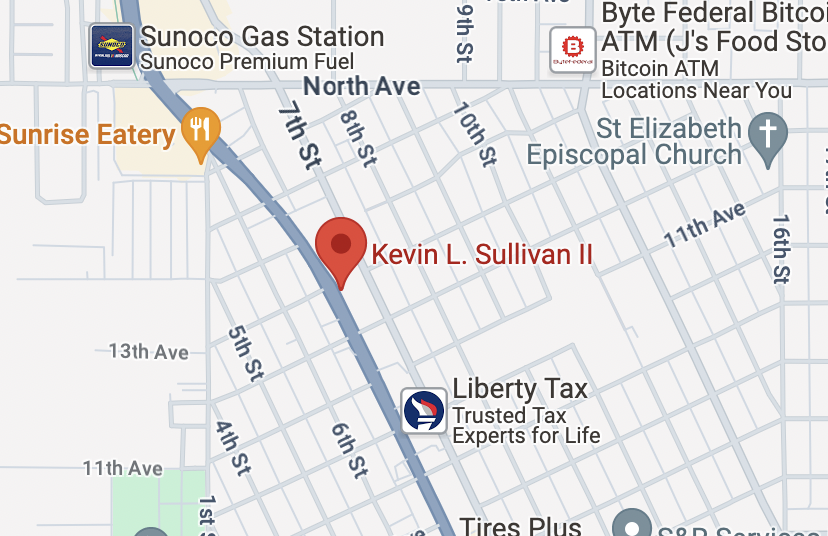
5720 Gall Boulevard, Ste 4
Zephyrhills, FL 33542
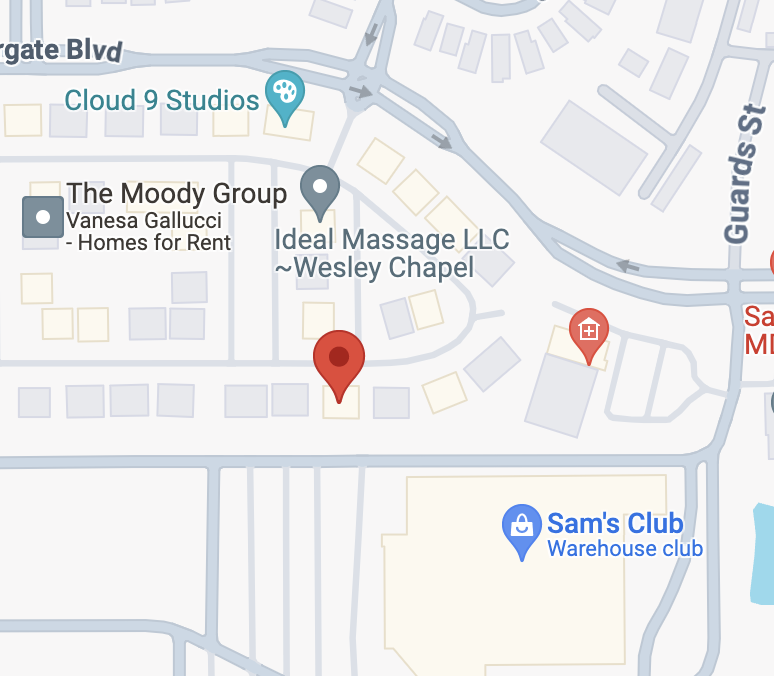
27642 Cashford Cir, Suite #110
Wesley Chapel*, FL 33544
5006 Trouble Creek Rd, Ste 205
Port Richey*, FL 33652
Sorry, the comment form is closed at this time.