

17 Aug What to Expect When Hiring an Auto Crash Lawyer
Hiring a lawyer after a car accident can feel like adding another task to an already crowded list. You may be dealing with doctor visits, vehicle repairs, missed work, insurance calls, and pain that makes ordinary routines harder than they were a week ago.
A good auto crash lawyer should take some of that weight off you.
Once you hire an attorney, the process usually moves from you trying to manage the claim yourself to having someone investigate the accident, deal with insurers, collect records, track your losses, and advise you about settlement decisions. If the case cannot be resolved fairly through negotiation, your lawyer can also discuss whether filing a lawsuit makes sense.
Here is what that process generally looks like in Florida.
Key Takeaways
- The first consultation is usually an evaluation, not a commitment. You discuss the crash, your injuries, insurance coverage, treatment, and the problems you are already experiencing with the claim.
- Most personal injury representation uses a contingency-fee agreement. The agreement should explain the attorney’s percentage and how case expenses will be handled.
- After you hire a lawyer, much of the insurance communication can move to your legal team. That gives you more room to concentrate on treatment and recovery.
- Investigation begins early. Police reports, photographs, witness information, medical documentation, insurance policies, and other evidence can all become important.
- Your medical recovery affects the legal timeline. A lawyer usually needs enough information about your injuries and prognosis to evaluate what a reasonable resolution should account for.
- A settlement is not the only possible outcome. If negotiations fail, the next stage may involve litigation, discovery, depositions, mediation, and possibly trial.
Get a Free Consultation
Call us at (813) 598-4868
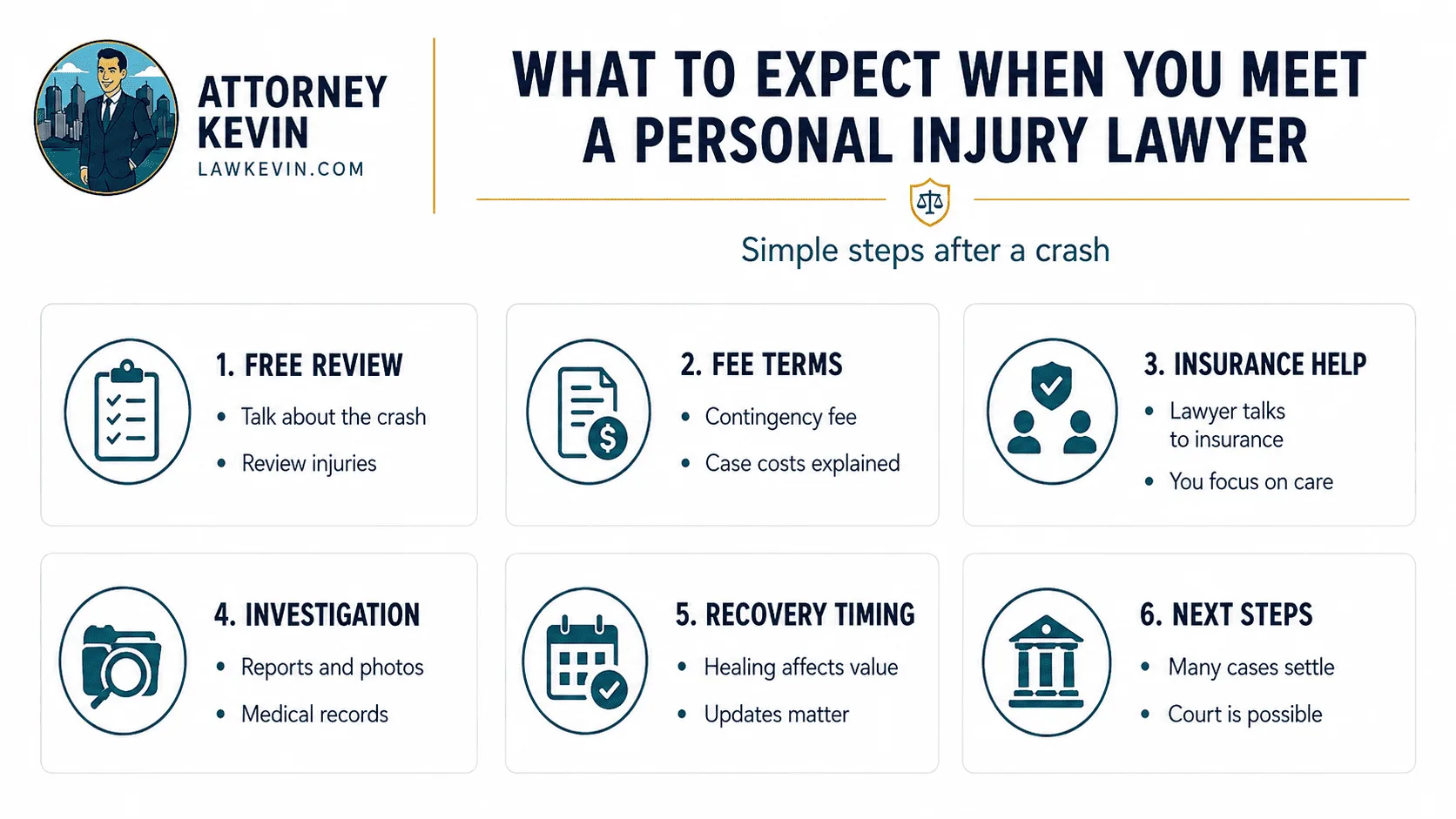
1. Your First Conversation Is About More Than “Do I Have a Case?”
The initial consultation gives both you and the attorney a chance to understand what happened.
Expect questions about how the crash occurred, where it happened, who was involved, whether police responded, what injuries you experienced, and what medical treatment you have received so far. The attorney will also want to know what insurance companies are involved and whether an adjuster has already contacted you or made an offer.
Bring whatever information you have. A crash report, photographs, insurance correspondence, medical paperwork, repair estimates, witness details, and copies of messages from an insurer can help the attorney get oriented more quickly.
You do not need to arrive with a perfectly organized file. Most people don’t.
You should, however, leave the conversation with a better understanding of what the lawyer sees as the important issues in the claim.
Attorney Kevin L. Sullivan II’s website states that he offers free, no-obligation consultations for Florida accident victims. His current LeavenLaw profile identifies him as a shareholder who handles car accident, motorcycle accident, slip-and-fall, and other personal injury matters.
2. If You Hire the Lawyer, Read the Representation Agreement Carefully
After deciding to move forward, the next step is usually a written representation agreement.
Personal injury attorneys commonly work under a contingency-fee arrangement. Rather than billing a traditional hourly fee, the lawyer receives an agreed percentage of a recovery if the case is successful.
Florida has specific protections for clients entering these agreements. The Florida Bar states that contingency-fee contracts must be in writing and explain the percentage the attorney may receive, what expenses can be deducted, and how those expenses are handled.
Florida clients also have a useful protection that many people do not know about: in covered contingency-fee cases, a client generally has three business days after signing to reconsider and cancel the agreement in writing without owing an attorney’s fee, although actual costs incurred during that period may still be the client’s responsibility.
Kevin’s website states that his personal injury representation involves no upfront attorney’s fee and that attorney’s fees are charged only if there is a recovery.
Even with a contingency arrangement, read the contract rather than relying on a slogan or a percentage discussed over the phone. Ask how litigation expenses, medical-record fees, expert costs, and other case expenses would be treated.
3. The Insurance Company Usually Stops Being Your Main Point of Contact
For many clients, this is one of the biggest practical changes after hiring an auto crash lawyer.
Before representation, the adjuster may be calling you directly, requesting statements, asking for documents, or discussing settlement. Once an attorney becomes involved, much of that claim-related communication can be handled through the lawyer’s office.
That does not mean you will never speak to your own insurer again or that you should ignore insurance correspondence. It means you now have someone who can help determine what needs a response and how the response should be handled.
Kevin describes his approach simply: he deals with the insurance companies while clients focus on getting healthy. His website also says clients receive direct communication and updates as their claims progress.
That division of labor is useful because what seems like a routine insurance request can sometimes affect the larger claim.
4. Your Lawyer Starts Building the Evidence
Once representation begins, the case has to be documented.
That work may involve obtaining the crash report, reviewing photographs or video, identifying witnesses, checking applicable insurance policies, collecting medical records, documenting lost income, and looking more closely at how the collision occurred.
Some accidents require additional investigation. For example, questions about vehicle speed, road conditions, commercial drivers, multiple vehicles, or disputed fault can create a need for evidence that a simple rear-end collision may not require.
Timing matters here.
Video can be overwritten. Vehicles get repaired. People forget details. Witnesses become difficult to reach. An early investigation gives the attorney a better opportunity to find and preserve evidence before it disappears.
You will probably be asked to help at certain points. If you remember a new witness, find another photo, receive an insurance letter, change doctors, or learn something new about the crash, tell your attorney.
The legal team can only work with information it knows exists.
5. Medical Treatment Continues While the Legal Claim Develops
Hiring a lawyer does not replace medical care.
Your doctors determine what treatment you need. Your attorney’s role is different: keeping track of the medical evidence and understanding how your injuries may affect the claim.
This part of the process can take time because the effect of an injury is not always obvious during the first few days after a collision.
Florida also has a particularly important insurance rule for accident victims. Under the state’s current Personal Injury Protection law, qualifying PIP medical benefits generally require the injured person to receive initial services and care within 14 days after the motor vehicle accident.
That is one reason an injured person should not casually put off medical evaluation while waiting to see whether an insurance dispute develops.
During treatment, keep your attorney informed about major changes. Surgery recommendations, new diagnoses, work restrictions, referrals to specialists, worsening symptoms, or a release from care can all change how the claim is evaluated.
6. Your Lawyer Looks at More Than the Medical Bills
A stack of hospital and therapy bills is part of a car accident claim. It is not the entire claim.
An attorney may also need to consider lost income, future medical needs, the length and severity of the recovery, permanent limitations, available insurance, damage to the vehicle, and how fault is likely to be allocated.
Florida law adds another layer in motor vehicle cases involving compensation for pain, suffering, mental anguish, and inconvenience. Section 627.737 sets a statutory injury threshold for recovering those noneconomic damages in covered cases, including qualifying permanent injuries, significant and permanent loss of an important bodily function, significant permanent scarring or disfigurement, or death.
Fault matters too.
Under Florida’s current comparative-fault statute, a person’s damages can be reduced according to that person’s share of responsibility. In negligence actions covered by the statute, a claimant found more than 50% responsible for their own harm cannot recover damages.
Those rules help explain why two crashes that look similar from the outside can produce very different legal outcomes.
7. A Demand Usually Comes After the Case Is Developed Enough to Value
People often expect the attorney to send the insurance company a settlement demand immediately after being hired.
Sometimes quick action is appropriate. Other cases need more development.
If you are still undergoing treatment and nobody knows whether you will recover fully, settling too early could mean evaluating the claim without knowing the full medical picture.
Once enough information is available, the attorney may prepare a settlement demand explaining the accident, liability, injuries, treatment, financial losses, and the amount being sought.
Then the insurer responds.
There may be a counteroffer. There may be several rounds of negotiation. There may also be disagreements about fault, medical treatment, insurance coverage, or the value of certain losses.
A good attorney should explain those disagreements rather than simply telling you to accept or reject a number.
The settlement decision ultimately affects you.
8. Hiring an Auto Crash Lawyer Does Not Automatically Mean Going to Court
Many people hesitate to call an attorney because they assume hiring one means filing a lawsuit.
It doesn’t.
A lawyer can investigate and negotiate a claim without immediately taking the case to court. Litigation becomes relevant when a reasonable resolution cannot be reached, a significant factual or legal issue needs to be resolved, or filing is otherwise necessary to protect the client’s rights.
If a lawsuit is filed, the case becomes more formal.
Both sides may exchange information through discovery. Written questions can be sent. Documents can be requested. Depositions may be taken under oath. The court may set deadlines, hearings, or mediation.
Some lawsuits settle before trial. Others do not.
Your attorney should prepare you before any stage that requires your direct participation, particularly a deposition, mediation, medical examination, or trial.
9. How Long Will the Case Take?
There is no useful universal answer.
A relatively straightforward claim involving clear responsibility and a completed medical recovery may resolve much sooner than a case involving surgery, disputed fault, several insurance policies, or litigation.
Your medical condition often influences the timeline. So does the insurer’s response.
Moving too slowly can create problems. Moving too quickly can create different ones.
The goal should be to keep the case progressing without forcing a settlement before enough is known to make an informed decision.
A lawyer who gives you a precise settlement date during the first conversation should be able to explain what that prediction is based on.
10. You Still Have a Role After Hiring a Lawyer
Hiring counsel does not mean disappearing from the case until a check arrives.
Your attorney handles the legal work, but your participation remains important.
Keep your lawyer updated. Attend necessary medical appointments. Save relevant correspondence and receipts. Tell the legal team if you move, change phone numbers, see a new doctor, miss work because of the injury, or receive paperwork connected with the crash.
Be thoughtful about social media as well. A photograph or post without context can create an unnecessary argument about your physical condition or activities.
Most importantly, ask questions when something does not make sense.
Florida’s Statement of Clients’ Rights says clients are entitled to information about how their case is being handled and should be able to ask their attorney questions about the representation.
A personal injury case can last months or longer. Communication should not disappear after the representation agreement is signed.
11. Florida Deadlines Still Matter While Negotiations Are Happening
An insurance claim and a lawsuit are not the same thing.
Negotiating with an insurer does not mean you can ignore the legal deadline for filing an action.
Florida’s current statute of limitations generally provides a two-year period for actions founded on negligence. Different claims and circumstances can involve different deadlines, so the general rule should not be treated as a deadline for every possible accident case.
This is another reason an attorney begins looking at timing early rather than waiting until settlement discussions break down.
Missing the applicable filing deadline can have serious consequences.
What Good Communication With Your Lawyer Should Feel Like
You should know what is happening without feeling that you have to manage the case yourself.
That does not mean receiving a phone call every day. Many stretches of an injury claim involve treatment, waiting for records, reviewing evidence, or waiting for an insurer to respond.
What matters is knowing whom to contact and receiving meaningful answers when decisions have to be made.
Kevin L. Sullivan II emphasizes direct attorney communication as part of his client approach. His website states that clients receive his direct cell number and that he prioritizes keeping clients updated during their claims. The same site reports more than $40 million recovered for clients and offers free, no-obligation case evaluations.
Kevin became a partner and shareholder of LeavenLaw in 2023 and currently represents people injured in car accidents and other personal injury matters.
Get a Free Consultation
Call us at (813) 598-4868

What Should You Expect From Your Auto Crash Lawyer?
You should expect someone to understand the facts before making promises.
You should expect your calls and questions to matter. You should understand how the fee agreement works, what the lawyer is doing, what information is still needed, and why a settlement recommendation makes sense.
Most of all, you should have room to focus on getting better while your attorney handles the legal and insurance issues that come with the crash.
If you have been injured in a Florida collision and want to understand what happens next, Attorney Kevin L. Sullivan II offers a free, no-obligation consultation to review the circumstances of your accident and discuss your options.
Accident? Call Kevin.
This article is for general informational purposes and does not constitute legal advice or create an attorney-client relationship. Contact Attorney Kevin L. Sullivan II at 813) 598-4868 today.
Frequently Asked Questions
Q: What should I bring when meeting an auto crash lawyer?
A: Bring whatever you already have related to the collision. Useful materials can include the crash report, insurance information, photographs, medical paperwork, repair information, witness details, and correspondence from insurance companies. Do not delay a consultation simply because you do not have every document yet.
Q: Do I have to pay an auto crash lawyer upfront?
A: Many personal injury lawyers use contingency-fee agreements rather than hourly billing. Kevin’s website states that his clients pay no upfront attorney’s fee and attorney’s fees are charged only if there is a recovery. The written agreement should explain fees and how case expenses are treated.
Q: Will my lawyer speak to the insurance company for me?
A: Handling insurance communication is commonly part of the representation. Kevin specifically states that he deals with insurance companies so his clients can concentrate on their health and recovery.
Q: Does hiring a lawyer mean my car accident case will go to trial?
A: No. Hiring an attorney and filing a lawsuit are separate decisions. A claim may resolve through negotiation, while another may require litigation because the parties disagree about responsibility, injuries, coverage, or compensation. If litigation becomes appropriate, your lawyer should explain the process before moving forward.
Q: How soon should I get medical treatment after a Florida auto accident?
A: Florida’s PIP statute generally requires initial qualifying medical services and care within 14 days of the motor vehicle accident for PIP medical benefits. Medical decisions should be based on your health and advice from qualified healthcare professionals, not solely on an insurance claim.
Q: How long do I have to file a Florida car accident lawsuit?
A: Florida law currently gives many negligence actions a two-year limitations period. Exceptions and different deadlines can apply, so the correct deadline should be determined from the facts of the individual case rather than assumed from a general online rule.
Get a Free Consultation
Call us at (813) 598-4868
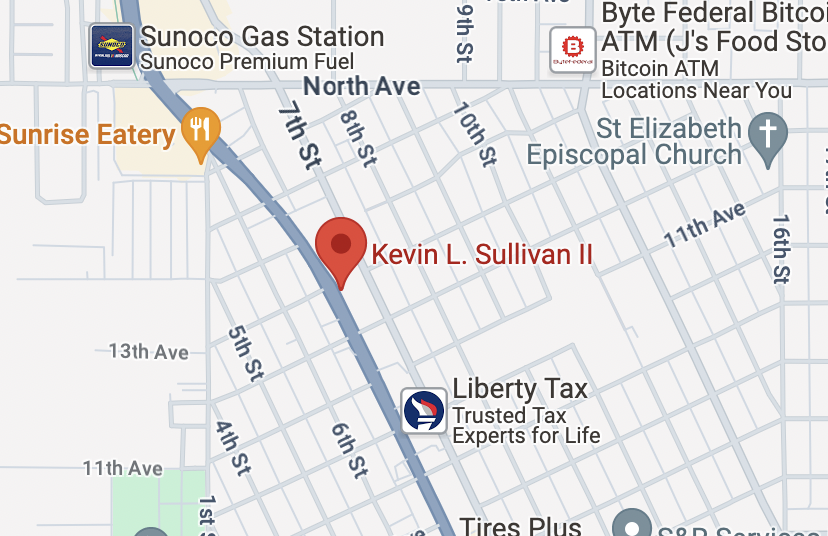
5720 Gall Boulevard, Ste 4
Zephyrhills, FL 33542
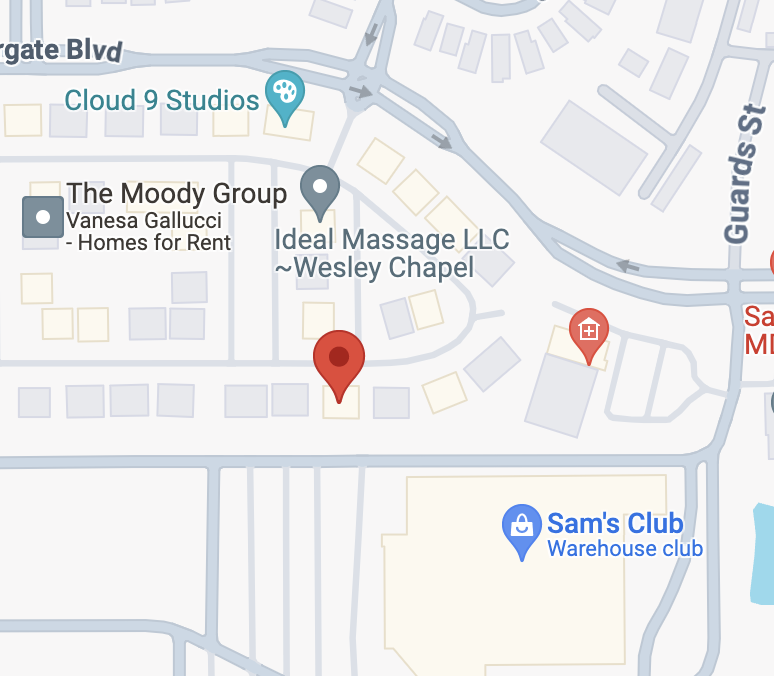
27642 Cashford Cir, Suite #110
Wesley Chapel*, FL 33544
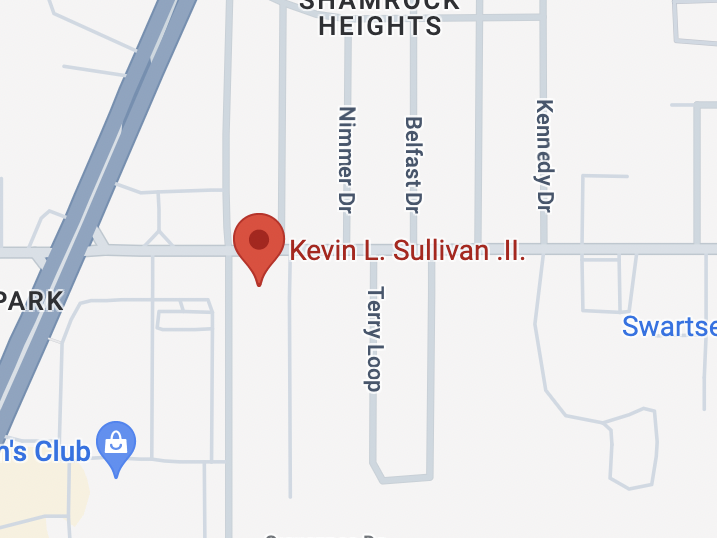
5006 Trouble Creek Rd, Ste 205
Port Richey*, FL 33652
Sorry, the comment form is closed at this time.