
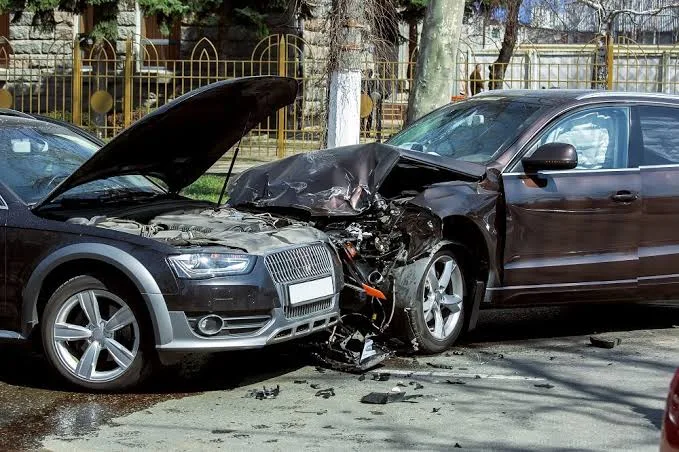
28 Sep How to Choose a Head-On Collision Lawyer
Choosing a Head-On Collision Lawyer should involve more than finding an attorney who handles car accidents and signing a contract after a brief phone call.
Head-on crashes can involve severe injuries, competing versions of how the collision happened, multiple insurance issues, and evidence that may become harder to obtain as time passes. If each driver says the other crossed the centerline, for example, the case may turn on physical evidence rather than the fact that the vehicles collided front to front.
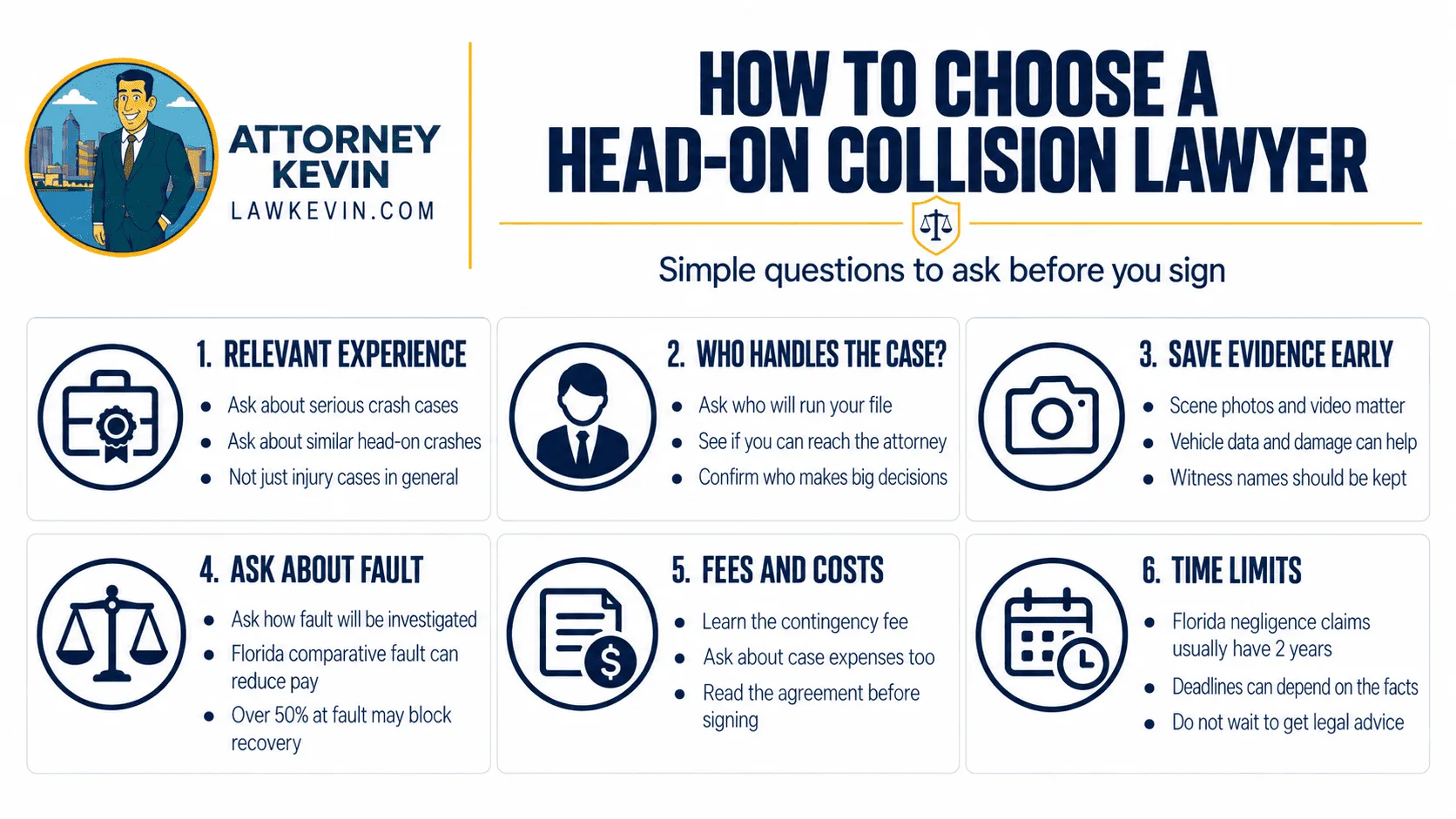
Before hiring an attorney, ask how the lawyer will investigate fault, preserve evidence, document your injuries, identify available insurance coverage, communicate with you, and handle the case if negotiations do not produce a reasonable resolution.
At the office of Kevin L. Sullivan II, we represent Florida accident victims and handle car accident claims throughout the state. Our current website states that Attorney Kevin has represented more than 1,000 accident victims, gives clients his direct cell phone number, and handles communications with insurance companies so clients can focus on recovering.
The following 10 questions can help you compare attorneys based on how they would actually handle your case—not simply on what an advertisement promises.
Key Takeaways
- Ask a Head-On Collision Lawyer about experience with serious motor vehicle cases and fact patterns similar to yours, not just personal injury in general.
- Find out who will actually handle your file and whether you will have direct access to the attorney responsible for major decisions.
- Head-on crashes can require early preservation of scene evidence, vehicle data, photographs, video, witnesses, and other information relevant to which vehicle crossed the centerline.
- Ask how the lawyer approaches disputed fault. Under current Florida law, comparative fault can reduce recovery, and a party found more than 50% responsible for their own harm generally cannot recover in a negligence action covered by the statute.
- Understand both the attorney’s contingency fee and responsibility for case expenses before signing the agreement.
- Florida currently provides a general two-year limitations period for negligence actions, although the exact deadline can depend on the claim and facts.
Get a Free Consultation
Call us at (813) 598-4868
Why Does Choosing the Right Lawyer Matter After a Head-On Crash?
Head-on collision cases can become complicated when fault, injury causation, future medical needs, or insurance coverage is disputed.
The direction of impact alone does not necessarily answer every legal question.
A crash may raise issues such as:
- Which vehicle entered the opposing lane
- Whether a driver was distracted, impaired, fatigued, or speeding
- Whether someone swerved to avoid another hazard
- Whether road design or weather contributed
- Whether there were multiple vehicles
- Whether vehicle data is available
- Whether witnesses saw what happened before impact
- Whether the injured person is accused of sharing fault
- Whether the available insurance is sufficient for serious injuries
That is why attorney selection should focus on investigation and decision-making, not only settlement promises.
NHTSA describes serious crash investigation as a process that can include scene inspection, vehicle inspection, photographs, skid or yaw marks, final vehicle positions, witness interviews, police records, and Event Data Recorder information when available. EDRs can record certain technical information from the seconds before, during, and after a crash, depending on the vehicle and system.
A lawyer does not need every category of evidence in every case. The important question is whether the attorney knows what evidence may matter in your crash and acts before useful evidence disappears.
1. How Much of Your Practice Involves Car Accidents and Serious Injury Cases?
Start by asking how much experience the attorney has with motor vehicle injury cases—not simply whether the firm accepts them.
Personal injury law covers many different situations. An attorney might handle premises cases, workers’ compensation matters, malpractice, defective products, vehicle accidents, or some combination.
A head-on collision involves questions specific to motor vehicle cases, including accident investigation, insurance coverage, medical causation, property damage, comparative fault, and potentially crash reconstruction.
Useful follow-up questions include:
- How often do you handle car accident cases?
- Do you regularly handle crashes involving serious injuries?
- Have you handled collisions where the direction of travel or lane position was disputed?
- What issues tend to make those cases more difficult?
Do not assume the answer based on the firm’s home page.
Ask directly.
Attorney Kevin L. Sullivan II’s current website lists car accidents as a primary practice area and states that he has represented more than 1,000 accident victims throughout Florida.
That provides useful background, but you should still discuss the particular facts of your head-on collision during the consultation.
2. Have You Handled a Head-On Collision With Issues Similar to Mine?
Similar experience matters more than the label “head-on collision.”
Two frontal crashes can present completely different legal problems.
One case may involve a driver who crossed the centerline while distracted.
Another may involve an alleged wrong-way driver.
A third may involve a commercial vehicle, disputed lane markings, a multi-vehicle chain reaction, or both drivers claiming they were in their proper lane.
Ask the lawyer what makes your situation legally or factually difficult.
A useful answer should go beyond:
“We handle cases like this all the time.”
The attorney should be able to explain what questions need answering.
For example:
- Is fault actually disputed?
- Is there evidence establishing the point of impact?
- Where are the vehicles now?
- Is video potentially available?
- Were there witnesses?
- Could electronic vehicle data matter?
- Are severe injuries still being evaluated?
- Is another person, employer, vehicle owner, or business potentially involved?
You are listening for reasoning, not a guaranteed outcome.
No lawyer can responsibly know the final value or result of a case from the collision description alone.
3. Who Will Actually Handle My Case?
Ask who will make the important decisions, communicate with you, negotiate with insurers, and handle the case if litigation becomes necessary.
The person you speak with during the initial consultation may not always be the person handling your file from day to day.
That does not automatically make a firm a poor choice. Lawyers appropriately work with paralegals, assistants, investigators, experts, and other attorneys.
What matters is knowing how responsibility is divided.
Ask:
- Who is my primary attorney?
- Will I be able to contact that attorney directly?
- Who gives me major case updates?
- Who negotiates with the insurance company?
- If a lawsuit is filed, does the same lawyer remain responsible?
- How quickly are client questions typically answered?
Communication can become particularly important after a serious collision because medical treatment, insurance questions, vehicle issues, and financial concerns may develop at the same time.
Our current client commitment at Kevin L. Sullivan II includes providing clients with Attorney Kevin’s direct cell phone number. The firm’s website states that maintaining contact and keeping clients updated throughout their claims are priorities.
4. How Will You Investigate Who Caused the Head-On Collision?
A Head-On Collision Lawyer should be able to explain what evidence may establish how the crash happened rather than assuming fault from the damage alone.
In some cases, responsibility is relatively clear.
In others, both drivers may tell entirely different stories.
Evidence worth investigating can include:
- Crash-scene photographs
- Vehicle damage
- Police crash reports
- Witness statements
- Nearby surveillance or dashcam footage
- Road markings and signage
- Final vehicle positions
- Skid or tire marks
- Mobile-device evidence when legally obtainable and relevant
- Event Data Recorder information
- Vehicle inspection findings
NHTSA says EDRs may contain information involving pre-crash vehicle dynamics, certain driver inputs, crash characteristics, and restraint-system status. NHTSA also uses scene, vehicle, witness, police-report, and EDR evidence when available in its own specialized crash investigations.
Not every head-on collision requires an accident reconstruction expert.
But if fault is genuinely disputed and the physical evidence is complex, ask how the attorney decides whether reconstruction or other expert analysis is justified.
The answer should depend on the case rather than an automatic formula.
5. What Happens If the Other Driver Says I Crossed the Centerline?
Ask this question even if you are certain the other driver caused the crash. A disputed-liability case needs a plan for proving your version of events.
Florida currently follows a modified comparative-fault system for negligence cases covered by Florida Statute § 768.81.
Damages can be reduced according to a claimant’s percentage of responsibility. Under the current statute, a party found to be more than 50% at fault for their own harm generally cannot recover damages in a covered negligence action, subject to statutory exceptions.
That makes a fault dispute potentially significant.
Suppose the defense claims you drifted partly across the centerline before the other vehicle struck you.
The case may require examining more than eyewitness memory. Vehicle positions, roadway evidence, electronic data, photographs, video, and damage patterns may become relevant.
Ask the attorney:
- What evidence would you look for first?
- How would you respond if the insurer assigns part of the fault to me?
- When would you consider an accident reconstructionist?
- How does Florida’s comparative-fault law affect the case?
A strong answer should explain the issue without pretending the attorney can determine fault before reviewing the evidence.
6. How Will You Evaluate My Injuries and Future Losses?
Serious injury cases should account for more than the bills that have arrived so far.
Head-on crashes can produce significant trauma. Kevin L. Sullivan II’s current car-accident practice page identifies fractures, spinal cord injuries, traumatic brain injuries, internal injuries, and burns among injuries that may arise from high-impact auto accidents.
The legal analysis should be based on your actual diagnoses and prognosis, not on a generic list.
Ask how the attorney evaluates:
- Past medical treatment
- Future medical needs
- Lost earnings
- Reduced ability to work
- Permanent impairment
- Scarring or disfigurement
- Limitations on daily activities
- Other legally recoverable losses supported by the case
This question becomes particularly important when medical treatment is still underway.
An early settlement may be difficult to evaluate if surgery, rehabilitation, work restrictions, or long-term limitations remain uncertain.
Ask how the lawyer determines when enough medical information exists to evaluate settlement responsibly.
7. Will You Investigate All Available Insurance and Potentially Responsible Parties?
The first insurance policy identified after the crash may not always be the only relevant source of coverage.
This matters most when injuries are substantial.
Depending on the facts, an attorney may need to investigate issues involving:
- The other driver’s liability insurance
- Your own applicable coverage
- Uninsured or underinsured motorist coverage
- Vehicle ownership
- Employer responsibility if a driver was working
- Commercial policies
- Other potentially responsible parties
This does not mean additional defendants or insurance policies exist in every head-on collision.
It means the lawyer should ask before assuming.
A severe injury can be worth substantially more than the limits of one available insurance policy. Understanding the coverage picture early can therefore influence how the claim is investigated and pursued.
Ask:
“What insurance policies and potentially responsible parties will you investigate in my case?”
The lawyer should be able to explain the possibilities that reasonably fit the facts without promising that additional coverage will be found.
8. Are You Prepared to File a Lawsuit If the Case Does Not Settle?
You should know what happens if insurance negotiations do not resolve the case.
Ask the lawyer directly:
- Do you handle litigation?
- What circumstances would cause you to recommend filing suit?
- Who would handle my lawsuit?
- How do discovery and depositions work?
- How do you decide whether a settlement should be accepted?
- What happens if the case actually approaches trial?
Do not assume “personal injury lawyer” automatically answers those questions.
Likewise, do not assume that filing a lawsuit means a case will definitely be tried before a jury. Claims can settle after litigation begins.
The purpose of this question is to understand the attorney’s process if an insurer denies liability, disputes the severity of the injuries, challenges causation, or will not agree to a settlement the client is willing to accept.
An attorney should be able to explain both negotiation and litigation without promising a particular result.
9. What Will I Pay, and Who Is Responsible for Case Costs?
Ask for a clear explanation of attorney fees and litigation expenses before signing a contingency-fee agreement.
Attorney fees and case costs are related, but they are not necessarily the same thing.
Case expenses can potentially include items such as:
- Court filing fees
- Medical-record charges
- Deposition expenses
- Expert fees
- Investigation costs
- Other litigation expenses
Ask exactly how those expenses are handled and what happens if there is no recovery.
The Florida Bar’s Statement of Clients’ Rights for contingency-fee cases says there is no legally required fixed percentage that every attorney must charge. The proposed fee should be explained, contingency agreements must be in writing, and clients generally have three business days to reconsider and cancel covered contingency agreements in writing, subject to the rules described by the Bar.
Kevin L. Sullivan II’s current website advertises free, no-obligation consultations, no upfront costs or fees, and attorney fees only if he wins for the client. It also states that if he does not win, the client owes him nothing.
Even when a website provides that information, read the written fee agreement.
Ask the lawyer to explain anything that is unclear before signing.
10. What Deadlines Apply, and What Should We Do Immediately?
A good consultation should address both the ultimate filing deadline and evidence that may need attention much sooner.
Under the 2026 Florida Statutes, an action founded on negligence generally must be commenced within two years.
That does not mean every accident-related legal deadline is simply “two years.”
Different claims, defendants, accident dates, and circumstances can involve different requirements. The attorney should determine which deadlines apply to the specific case rather than relying on a general internet rule.
There is another reason to ask this question early: evidence does not follow the statute of limitations.
Video can be overwritten.
Vehicles can be repaired or sold.
Witness memories can fade.
Physical conditions at the scene can change.
Electronic evidence may require appropriate preservation steps.
So ask two separate questions:
“What is my legal filing deadline?”
and
“What evidence needs to be preserved now?”
Those answers may have very different timelines.
What Answers Should Make You Ask More Questions?
Choosing an attorney is not about finding someone who gives the most confident answer to every question.
In fact, caution can be a positive sign when important facts are still unknown.
Be wary of answers that sound like:
- “Your case is definitely worth $500,000.”
- “This will settle in exactly three months.”
- “Head-on collision means the other driver is automatically liable.”
- “You don’t need to worry about the fee agreement.”
- “We’ll figure out the evidence later.”
- “Every case like yours goes to trial.”
- “Every case like yours settles.”
Personal injury cases depend heavily on facts.
Kevin L. Sullivan II’s own website recognizes that case value can vary based on factors such as fault, injuries, property damage, medical expenses, and the number of people injured.
That is a more realistic framework than guaranteeing a result during the first consultation.
Should You Hire the Biggest Personal Injury Firm?
Firm size by itself does not tell you whether a lawyer is a good fit for your case.
A large firm may have extensive staff and resources.
A smaller practice may offer more direct attorney involvement.
Neither structure is automatically better.
Instead, ask questions that tell you what representation will actually look like:
- Who knows the facts of my case?
- Who will return my call?
- Who decides when to make a demand?
- Who explains settlement offers?
- Who will take depositions if litigation begins?
- Will I know the attorney responsible for the case?
For some clients, direct access is especially important.
At Kevin L. Sullivan II, our published client commitment includes giving clients Attorney Kevin’s direct cell number, (813) 598-4868, and handling insurance-company communications while they focus on medical recovery.
What Documents Should You Bring to the Consultation?
You do not need to build the entire case before speaking with a lawyer.
However, the information you already have can make the initial discussion more useful.
If available, consider bringing or providing:
- Crash report or report number
- Photographs and videos
- Insurance information
- Correspondence from insurers
- Witness names or contact information
- Medical records or discharge instructions already in your possession
- Medical bills
- Information about missed work
- Photographs of vehicle damage
- Tow-yard or repair information
- Dashcam footage
- Notes about what you remember before and after impact
Do not delay a consultation solely because you are missing a document.
Part of an attorney’s job is identifying what still needs to be obtained.
How Quickly Should You Contact a Head-On Collision Lawyer?
If the crash caused significant injuries or fault is disputed, getting legal guidance early can help identify evidence that may need preservation and deadlines that need attention.
The statute of limitations may provide substantially more time than a surveillance camera keeps its footage.
Those are two different clocks.
Early involvement can also allow an attorney to understand where the vehicles are located, identify potential witnesses, communicate with insurers, and assess whether additional investigation is warranted.
That does not mean every collision requires immediate litigation.
Investigation and filing a lawsuit are different decisions.
The goal at the beginning is to preserve options.
Get a Free Consultation
Call us at (813) 598-4868
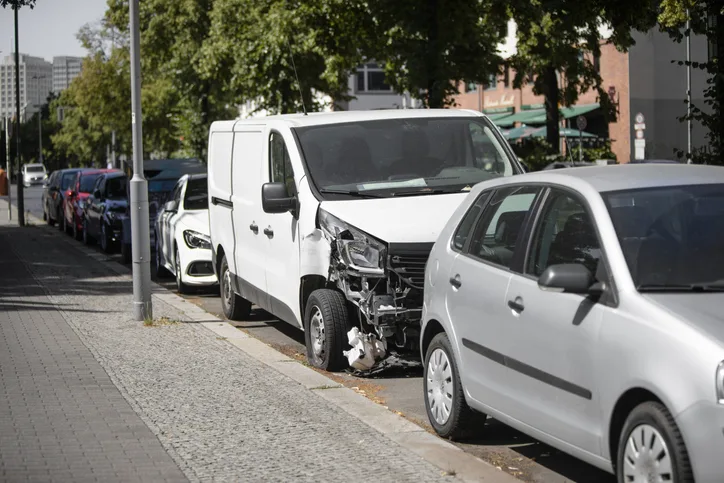
Choosing a Head-On Collision Lawyer in Florida
The right lawyer for your case should be able to explain both what is known and what still needs to be investigated.
You should leave the consultation with a clearer understanding of:
- The major liability questions
- Evidence that may matter
- How the attorney will communicate
- Who will actually handle the file
- How fees and costs work
- Which insurance issues need investigation
- What happens if settlement negotiations fail
- What deadlines apply
At the office of Kevin L. Sullivan II, we represent car accident victims throughout Florida. Attorney Kevin’s current practice materials state that he has represented more than 1,000 accident victims and that the firm has recovered more than $40 million for clients across its personal injury practice. Our client commitments include a free, no-obligation consultation, direct access to Attorney Kevin, no upfront costs or fees, and no attorney’s fee unless we obtain a recovery for you.
Past results do not determine the outcome of a new case. Every collision depends on its own evidence, injuries, coverage, and legal issues.
If you were injured in a head-on collision in Florida and want to discuss what happened, call Attorney Kevin L. Sullivan II at 813) 598-4868 for a free, no-obligation consultation.
Frequently Asked Questions
Q: What does a Head-On Collision Lawyer do?
A: A Head-On Collision Lawyer investigates how the crash occurred, identifies potentially responsible parties and insurance coverage, gathers evidence, documents injuries and damages, communicates with insurers, negotiates the claim, and may pursue litigation when appropriate.
Q: Is the driver in the other vehicle automatically at fault in a head-on collision?
A: No. The direction of the collision does not by itself establish legal responsibility in every case. Investigators may need to determine which vehicle left its proper lane, why that occurred, whether another hazard contributed, and whether either driver shared fault.
What evidence can help prove fault in a head-on collision?
A: Depending on the case, useful evidence can include photographs, roadway markings, vehicle damage, witness accounts, police records, video, vehicle inspections, and Event Data Recorder information. NHTSA uses these types of evidence in crash investigation when available.
Q: What if both drivers blame each other?
A: A disputed account makes objective evidence particularly important. Florida’s comparative-fault rules can also affect recovery if an injured party is found partially responsible. Under current law, damages can be reduced according to fault, and a party more than 50% responsible for their own harm generally cannot recover in a negligence action covered by the statute.
Q: How long do I have to file a head-on collision lawsuit in Florida?
A: Florida’s current general limitations period for an action founded on negligence is two years. Different claims or circumstances may involve additional rules, so the specific deadline should be evaluated based on the facts rather than calculated from a general website statement.
Q: Should I hire a lawyer while I am still receiving medical treatment?
A: You do not necessarily need to finish treatment before consulting an attorney. In a serious injury case, early legal guidance may help with evidence preservation, insurance communication, and deadline issues while the medical picture continues to develop.
Q: How much does a Florida head-on collision lawyer charge?
A: Many personal injury lawyers use contingency-fee arrangements in which attorney compensation depends on a recovery. The percentage, responsibility for expenses, and other terms should be explained in the written agreement. The Florida Bar provides specific client rights for contingency-fee cases.
Q: Does hiring a lawyer mean my case will go to court?
A: No. Many claims are negotiated without trial. Hiring an attorney gives you representation during the claim and, where appropriate, the ability to consider litigation if the dispute cannot be resolved through negotiation.
Get a Free Consultation
Call us at (813) 598-4868
5720 Gall Boulevard, Ste 4
Zephyrhills, FL 33542
27642 Cashford Cir, Suite #110
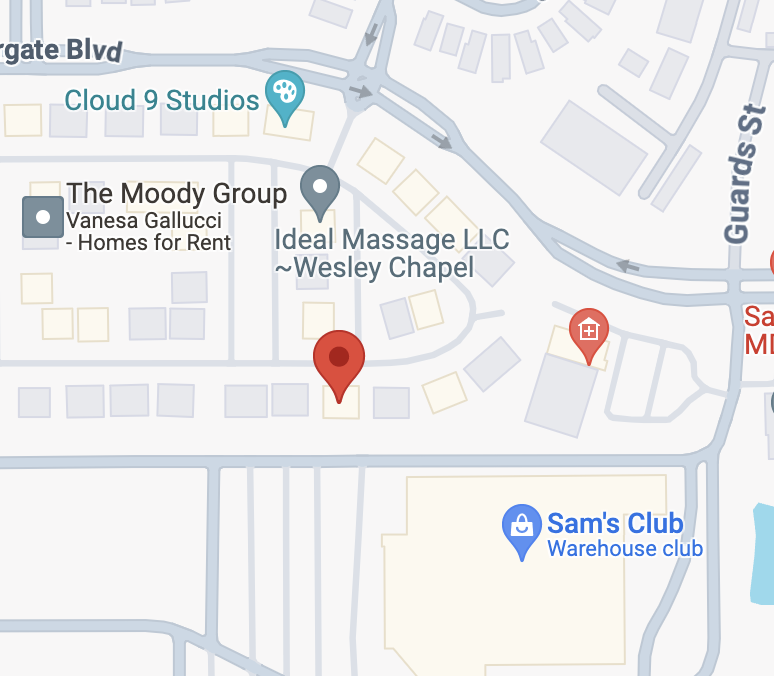
Wesley Chapel*, FL 33544
5006 Trouble Creek Rd, Ste 205
Port Richey*, FL 33652
Sorry, the comment form is closed at this time.